
Books
Editors: Dev Nathan, Meenu Tewari and Sandip Sarkar Can firms and economies utilise GVCs for development? How can they move from low-income to middle-income and even high-income status? This book addresses these questions through a series of case studies examining upgradation and innovation by firms operating in GVCs in Asia. The countries studied are China, India, South Korea, the Phillipines, and Sr Lanka with studies of firms operating in varied sectors aerospace components, apparel, automotive, consumer electronics including mobile phones, telecom equipment, IT software and services, and pharmaceuticals. Flyer  "New Publication Out: Growth And Inequality: The Contrasting Trajectories of India and Brazil; by: Alexandre de Freitas Barbosa, Maria Cristina Cacciamali and Gerry Rodgers"
|
|
Author: Alexandre de Freitas Barbosa & Maria Cristina Cacciamali & Gerry Rodgers Inequality is a global concern, for its social and human consequences, and its impact on the pace and pattern of economic growth. In India and Brazil, this issue has received increasing attention in recent years. In Brazil, inequality grew until the 1980s, when it reached extreme levels, but has since been declining, especially during the first decade of the twenty-first century. In India, inequality showed little change up to the 1980s, but has since been rising. These differences result from a variety of economic, social and political factors, which are examined in depth in this comparative study. The book examines inequality in overall distributions of income and expenditure, and disparities across gender, region, caste, race, and access to education. It compares the experience of the two countries, and draws conclusions on the types of policy frameworks and institutions that might lead to a more equitable pattern of growth. + Read More |
|
Edited by:
Dev Nathan and Akhilesh K. Sharma South Asia is one of the fast growing regions of the world economy. But because high growth came late, the economies are still either low income or low-middle income. With the exception of Sri Lanka all face serious problems of high levels of informal employment and poor human development. In the matter of gander participation in economic activity too, there is high inequality. This volume explores employment policies, their outcomes, and social protection in five countries – Bangladesh, India, Nepal, Pakistan, and Sri Lanka. This book will be a useful reference for researchers, policymakers, and social scientists working on employment and social protection in South Asia. |
|
Edited by:
Tanuka Endow, Sumit Mazumdar and Mitu Sengupta The Millennium Development Goals (MDGs) set for the target year of 2015, have brought human development issues to the global centre-stage. The MDGs, which address issues ranging from poverty and hunger, health, education to environmental sustainability and global partnership, have provided a roadmap to governments towards a better future for the world. With the MDG deadline drawing near, the global conversation is slowly crystallising around a new set of goals, to be termed as 'Sustainable Development Goals'. However, there has been a lack of effective participation of the countries of Global South in this conversation. Since the MDGs were drawn up in 2000, many Southern countries have emerged as key players on the world stage. Therefore, it is imperative that the Southern voices are heard and have a leading role in setting the agenda for development in the post- 2015 years. In the light of this international discourse and the urgent need for Southern voices to effectively participate in the global conversation around the post-2015 development agenda, this volume carries the voices of the experts and academicians in order to strengthen the recommendations for a Southern-led, Southern-focused post-2015 development agenda globally. It is hoped that the papers from across the globe, with an introduction, contained in this volume will help in building a momentum around shaping the agenda by engaging a diverse set of stake-holders. This publication has been funded by Government of UK, Department for International Development under the Knowledge Partnership Programme (KPP), implemented by IPE Global Pvt. Ltd. However, the views expressed are of individual authors and do not necessarily reflect the UK Government's official policies. |
|
Edited by : Dev Nathan, Meenu Tewari and Sandip Sarkar This book brings together a set of studies on labour conditions in GVCs in a variety of sectors—ranging from labour-intensive sectors like garments, fresh fruits, tourism, to medium- and high-technology sectors like automobiles, electronics and telecom, and knowledge intensive sectors (IT software services). The studies span a number of countries across Asia—Bangladesh, Cambodia, China, India, Indonesia, Sri Lanka and Vietnam. Participation as suppliers in GVCs has provided many benefits to Asia—increased employment in higher value activities or those with increasing returns, such as manufacturing and services, reduction in poverty, and the heightened participation of women in these modern sectors. However, this book also points to the continued weaknesses in these developments and the underside of participation in GVCs—such as the continuation of sweatshop conditions in several sectors, the persistence of child labour in many parts of GVC manufacture; the appearance of new forms of Taylorism in Call Centres; the high incidence of precarious employment in low-knowledge tasks, and so on. The book documents the uneven distribution of benefits along the value chain, the uneven patterns of the knowledge flows associated with out-sourcing and the contested nature of the impact of lead-firm business practices on wages and employment and work conditions in supplier countries, alongside the benefits of upgrading and job enlargement that has accompanied these same processes. In trying to identify spaces for progressive action and policies in the current GVC-linked global work environment, the book goes against the grain in searching for an alternative to laissez faire forms of globalization. |
|
by Gerry Rodgers and Vidhya Soundararajan This book is a systematic analysis of inequality in India and how it has been changing since the 1980s. It is focused on the labour market, and in particular on wage inequality, and also examines inequality in household expenditure. The book looks into the structure and segmentation of the labour market, both in terms of the nature of employment (casual and regular work) and in terms of some of the key divides: gender, caste and community, region and education. All of these factors are examined using National Sample Survey data, exploring the role of each in the overall pattern of inequality, and how their significance has been changing over time. A multivariate analysis brings these different factors together and assesses their relative importance. The monograph also considers the relationships between different aspects of inequality, comparing inequality of wages, income and expenditure, and discusses the changing share of labour income in value added. A final section examines the role played by occupational patterns and changes in the overall structure of labour market inequality. |
|
Edited by A.K. Shiva kumar, Preet Rustagi, Ramya Subrahmanian Children are individuals born with indivisible and inalienable human rights. They belong to families and communities that need to have access to appropriate resources, services, and capacities required to ensure realization of these rights. The rights of parents and caregivers are therefore closely intertwined with the rights of children. |
|
by Darshini Mahadevia and Sandip Sarkar Urbanising India has posed many challenges in terms of employment, poverty and quality of access to urban services. Most policy and research in these areas has focused on metropolitan cities, thereby creating a paucity of studies on the characteristics and dynamics of small and medium towns. This handbook is the first study on the inequalities between metros and non-metros with regard to poverty, employment, education levels and services over the last 25 years. Reprocessing NSS household-level data, including latest data from the 66th Round, the authors provide a disaggregated analysis for different classes of urban centres. The book focuses on (a) the importance of small and medium towns in urban development and (b) patterns of urban inequalities over time and policy implications of these. Comparing the pre- and ?post reform periods, the book presents disaggregated trends across major states in India of: urban poverty and per capita consumption expenditure; employment patterns and unemployment levels by gender; and level of basic facilities such as water supply, sanitation, and garbage collection. |
|
by Dev Nathan, Ganesh Thapa, Govind Kelkar, Antonella Cordone Indigenous peoples, also referred to as Scheduled Tribes, adivasis, hill tribes, minority nationalists, or ethnic minorities, predominantly inhabit the uplands and hill-forest regions of different nations in Asia. They are distinguished from the others in terms of their mode of production: subsistence production versus accumulation and income increasing production.
Markets and Indigenous Peoples in Asia analyses market-based and alternative development for indigenous peoples. The authors suggest that the benefits of increased connectivity and market-facilitating interventions correspond to an increase in production and improvement in the well being of these peoples. They further explore the scope for preserving indigenous identities combined with attempts at economic development. The study is based on intensive, multi-sited fieldwork in six Asian developing countries-India, China, the Philippines, Indonesia, Lao PDR, and Vietnam-and data collected from International Fund for Agricultural Development projects on indigenous peoples.
Scholars and students of sociology and anthropology, tribal studies, and development studies will find the detailed research and analysis in this book useful. It will also interest civil society representatives and development planners. |
|
Edited by Gerry Rodgers One of the central dilemmas of development is how to ensure that growth is both rapid and equitable. Employment is the key, but the employment performance of most economies leaves a great deal to be desired. The bulk of the population in low- and medium-income countries to scrabble for casual work, in informal labour markets, at poverty-level incomes. Dealing with such vulnerabilities calls for effective systems of social protection. But in the developing world, only a minority, and usually a small minority of the population, is protected by formal social security mechanisms. |
|
Edited by Dipak Mazumdar and Sandip Sarkar Issues relating to the size of firms in manufacturing are central to the discussion of development stratigies. This book offers an interpretation of growth trajectories in selected Asian economies in terms of the size stuture of enterprises in the manufacturing sector of these economies. |
|
by Gerry Rodgers, Amrita Datta, Janine Rodgers, Sunil K. Mishra, Alakh N. Sharma The Institute for Human Development has been carrying out a research programme on ?Inclusive Development in Bihar? since 2009. This book is one of the publications of this research programme. Written by a team of researchers with many years of experience in the state, it maps out the transformation of the agrarian system and the dynamics of the labour market. It explores the pattern and implications of high migration. It shows what has happened to living standards, poverty and social exclusion, and the impact of improved governance and innovative policies. And it suggests priorities for both research and policy if Bihar is to consolidate recent gains and embark on a sustainable path of inclusive growth. The book is largely based on a series of surveys that have been carried out over the last thirty years in the villages of the state. These surveys make it possible to analyse change in greater detail and with more confidence than in studies based on secondary sources. The book provides details of these surveys, which constitute an important resource and reference for future work in Bihar. |
|
Edited by Dev Nathan and Virginius Xaxa Development is seldom a linear, all-inclusive process. In order to understand the socio-economic and political ?exclusion? of the adivasi communities in contemporary India, a multi-dimensional analytical framework encompassing deprivation and ?adverse inclusive? can be extremely valuable. |
|
Edited by Parmod Kumar and Sandip Sarkar This book looks at the impact of recent agriculture-related policy changes on the emerging production, marketing and earning status of small versus large farmers based on primary and secondary data. Comparing two contrasting states of Punjab and Bihar, the study finds that whereas Punjab farming set the course of commercialization way back in the early seventies and the state has bright prospect for new phase of corporatisation leading to ascendancy of processing and value addition, Bihar agriculture is still caught in the web of subsistence farming. |
|
subEdited by K.R. Shyam Sundar After the economic reforms, employers in India, foreign investors, global financial agencies and the global rating agencies have been clamouring for reforming the governance of the labour markets and the industrial relations system. They argue that the laws and regulations introduce ?rigidities? in the labour market and disenable the employers from responding quickly and suitably to the dynamic competitive economic system in the globalized economic environment. Two issues have been hotly debated, viz.,the legal restrictions on retrenching workers and closure of firms and the contract labour employment system. |
|
BR Publishing SBN: 81-7018-975-6 1998 p545 Rs. 575 / US$ 28.75 This volume is an outcome in response to the need for regional tripartite interactions on labour and social issues where academics and non-governmental organisational also are enabled to provide inputs and facilitate the much needed social linkages for economic growth and human progress in South Asia. Written by labour economists, industrial relations experts and labour and social activists, the volume is important in putting together some scholarly papers with national and regional perspectives on issues of labour market and employment; industrial relations; and poverty and human development in South Asia in the wider context of the ongoing changes in the global economy. With a concern throughout to offer concrete suggestions for policy and action, the book is comprehensive enough as also specific to be key reference for all concerned with labour market and human development issues in the context of economic restructuring. |
|
ISBN: 81-900948-0-7 1998 p440 Hardback Rs. 450 Even though there are signs of improvement in the levels of living and earnings during the 1980s, the rural labour, which is the most vulnerable among various groups of workers, has been largely bypassed by the process of socio-economic development in India over the last five decades. The processes of structural adjustment programme underway in the economy have a direct as well as indirect bearing on the rural labour. In the emerging scenario it is necessary to examine afresh the recent trends and policies which have implications for the empowerment of rural labour. |
|
The study presents a comprehensive report on the various processes involved in the development of India Water Vision 2025, and is based on a number of national and zonal level discussions and meetings. The participants in these discussions represented various stakeholders including ministers, senior government officials, academicians, media persons and representatives of NGOs and the private sector. While a vision was not to be constrained by present-day realities, it was considered important to quantify the implications of the Sustainable World Scenario in terms of food security, livelihood security, health security, ecological security and water resources development. |
|
ISBN: 81-900948-4-X 2001 p523 Hardback Rs. 750 Social security measures in India have gained much attention in the wake of increasing informalisation of the economy consequent upon the introduction of economic reforms in the early 1990s. It is widely feared that this will result in a rise in deprivation and poverty as the workers in the unorganised sector lack even minimal security mechanisms necessary for social and economic well-being. |
|
ISBN: 81-900948-5-8 2001 p440 Hardback Rs. 650 Recent decades have witnessed a rapid increase in employment in informal sector, particulary in the developing world. India, too, has experienced this phenomenon, with this sector accounting for over 90 per cent of all employment. The process has further been accelerated with the initiation of the programmes of liberalisation and globalisation since the early 1990s. The emergence of the informal sector has often been viewed as providing a solution to the growing problem of unemployment by ensuring sustainability of livelihood for large sections of the population, particularly the poor. Indeed, a significant part of the incremental employment generated in the nineties is in informal activities, both within manufacturing and tertiary sectors. And yet, it remains one of the less researched areas in the context of formulating a development policy. |
|
IHD ISBN 81-900948-6-6 p Hardback Royal Vo Rs. 750/- The book is the outcome of the IHD-WFP Workshop on 'Food Insecurity and Child Work' held in Delhi in March 2001. Poverty, seasonal food distress and vulnerability to hunger due to recurrent natural calamities alter the lifestyles and coping mechanisms of affected families with adverse consequences on the freedom and the education of their children. However, the availability of timely support in the form of food can become the turning point of the decision to enrol the child in school as against work, to ensure regular attendance of the already enrolled children and to eventually break the vulnerable household-child labour syndrome. |
|
ISBN 81-900948-7-4 2003 Hardback Royal 4vo 464 p. Rs. 750 / US$40 The volume, containing the contributions of a good number of scholars, discusses food security in India in a broad framework which go beyond supply and demand. It is not only a comprehensive publication, but also one which addresses critical issues and emerging concerns on food security such as the demand for and supply of foodgrains in future; policy response to domestic reforms and globalisation; regional scenario and micro-level experiences; and ongoing perspectives such as the working of the PDS, nutrition and right to food. The book will be extremely useful for all those concerned with analysis of and the formulation of policy for food security. |
|
ISBN: 81-88315-03-6 2004 p160 Hardback Rs. 290 / US$ 20 Significant changes have taken place in the Indian labour market after the initiation of liberalisation, globalisation and privatisation policies in 1991. In this context, it becomes important to examine the controversial issue of labour flexibility vis-a-vis economic liberalisation. |
|
ISBN: 81-7304-519-4 Hardback p184 Rs. 500 This book is perhaps the first attempt to study the menacing problem of lockouts in India which has plagued industries in the last three decades Besides giving an overview of lockouts from 1961 to 1997. the author has made a special study of lockouts m West Bengal—the stale with maximum number of man days lost due to lockouts m India. He suggests that the causes for lockouts put forward by the Indian government n the Labour Year Book as well as Labour in West Bengal (a publication of the West Bengal government) are not tenable since the data is based on the employer's perception only. The major causes of lockouts, he suggests are: downsizing of labour and casualisation, increasing workload of workers, absence of a long-term perspective by employers, failure to bring about technological upgradation, pre-occupation with short-term profits, inefficient management, inter-family disputes, indiscipline and violence to some extent and cost reduction during periods of low demand. |
|
ISBN: 81-88315-04-4 2004 p167 Hardback Rs. 280 / US$ 20 In recent years there has been widespread reports in the media, both inside and outside the country, about the exploitation of child labour, including bonded labour in India's carpet industry. In the wake of the criticisms, several measures have been initiated to tackle the problem of child labour in carpet production. Social labelling was one such initiative introduced in the nineties. It aims at improving the living and working conditions of the weaving community by exerting pressure on the exporters/suppliers to enforce fair conditions including prohibiting child labour in the production of carpets. This is considered to be an important intervention at the economic level, linking trade with the prohibition of child labour. |
|
ISBN: 81-88315-08-7 Hardback p200 Rs. 350 / US$ 25 / Euro 20 Pro-active policies against child labour and child neglect in general have been pursued with more public attention than ever before. Governments, NGOs and international organisations such as the ILO and UNICEF and the World Bank have well-funded departments. Policies, however, stand to benefit from detailed and unbiased research. This book fills such a gap. It provides insights at various levels: macro-policies, analytical treatment of some issues such as the magnitude of the problem, the fashionable approach of child participation, and globalisation. But the book mainly draws meticulous pictures of how the deprived children live, what it means to work for a living or to live in the streets. Case studies deal with Vietnam, India, Guinea, Bolivia and Brazil. |
|
ISBN 81-88315-11-7 2005 Hardback Royal 4Vo p536 Rs. 950/ US$ 60 The role of rural non-farm sector (RNFS) is crucial both in generating productive employment and alleviating poverty in rural areas because of the limited absorptive capacity of the urban sector and near saturation of the agricultural sector in further absorption of workers. Policy makers are increasingly recognising the importance of RNFS in providing sustainable livelihoods to a large number of people in rural areas. However, in spite of a lot of research that has been carried out, our understanding of the RNFS, particularly its role in the broader development process, is relatively poor and does not provide adequate insights to policy makers grappling with the enormous diversity of the sector. Editors: |
|
ISBN: 81-902946-8-7 p328 Hardback Rs. 595 This book brings out the constraints in the anti-poverty policies in India that result from the elite-driven feature of its democracy. Using a three-phase conceptual framework, the author argues that India has still not moved beyond modest achievements in alleviating hardcore poverty. In the first Part the book discusses how Human Development Indices remain very low and empowerment of the poor has not been institutionalised even at the lowest level of village Panchayats. In the second Part the author discusses the important, but relatively neglected, theme of poverty generating processes with special focus on the marginahsation process in agriculture and policy weaknesses in creating livelihoods for the poor. In the last Part the author pleads for policy-making that is based on a 'systemic view' of poverty rather than the prevailing 'statistical view' for dealing with the emerging phase in poverty reduction. |
|
ISBN 81-88315-12-5 Hardback Demy 8vo 176 pages Rs. 295 / US $20 Of late, issues concerning various aspects of the lives of children have come to grab the focus of attention. And rightly so given that more than a third of the population constitute children who, after all, are the future of the country. Doubtless, there is no dearth of policies that have been formulated, seminars and discussions that have taken place, funds that have been made available and NGOs that are functioning actively in this sphere. But how much do we really know about the daily lives of children, particularly the poor who live in remote villages and in the slums of cities? |
|
IHD ISBN: 81-88315-17-6 Hardback p524 Price: Rs. 950/ US$ 60 2006 Although health infrastructure has grown impressively in India after independence, there is widespread malnutrition and prevalence of ill health in the country. While households incur bulk of the health expenditure, government expenditure is limited to only about one-fourth of the total expenditure. India is among those few countries, which spend the least on health. No wonder, expenditure on health care has emerged in recent years as the second most important source of rural indebtedness in the country. EDITORS |
|
ISBN10: 978-0-415-43611, Price: Rs. 695, Paperback also in Hardback] India started on a program of reforms, both in its external and internal aspects, sometime in the mid-eighties and going on into the nineties. While the increased exposure to world markets ("globalization') and relaxation of domestic controls has undoubtedly given a spurt to the GDP growth rate, its impact on poverty, inequality and employment have been controversial. This book examines in detail these aspects of post-reform India and discerns the changes and trends which these new developments have created. Providing an original analysis of unit-level data available from the quinquennial National Sample Surveys, the Annual Surveys of Industries and other basic data sources, the authors analyze and compare the results with other pieces of work in the literature. As well as describing the overall situation for India, the book highlights regional differences, and looks at the major industrial sectors such as agriculture, manufacturing and tertiary services. The important topic of labor market institutions - both for the. formal or organized and the unorganized sectors - is considered and the possible adverse etect on employment growth of the regulatory, labor 'framework iN examined carefully. Since any reform of ;this framework must go hand in hand with better state intervention in the informal sector to have any chance of acceptance politically,, some of the major initiatives in this area are critically explored. Overall, this book will be of great interest to development economists, labor economists and specialists in South Asian Studies. Contents . |
|
|
|
ISBN: 978-0-415-47986-8 Hardback 2008 Pages: 288 £ 50 This study challenges the dominant tendency of civil society to negate international trade as such. The authors argue that it is necessary to frame differentiated trade rules based on levels of economic development, and also to shift from subsidies to shore up uncompetitive livelihoods to productivity-enhancing investments.Most importantly, the book ends with a case for trade unions, women's organizations and other civil society organizations to imagine and create themselves as being global -- in order to take up the challenge of strengthening global countervailing power to capital. |
|
M Vijayabasker and V Gayatri This book is based on papers presented during an international conference on ICTs, organised by the Institute in association with The Institute of Social Studies, The Hague. The book is the first of its kind in that it compiles the optimistic voices of techno-idealists, critical social science perspectives on technology and a range of empirical material on the impact of Information and Communication Technologies (ICTs) on the lives of people. The book traces these processes across urban and rural spaces of work, consumption, and e-governance, while delineating the new kinds of social identities that they are fostering in India. It opens up a wide arena for dialogue between activists, technologists, policy-makers and academia on the use of ICTs for development. |
|
| Food Security Atlas of Rural Jharkhand | |
| Food Security Atlas of Rural Orissa | |
| Food Security Atlas of Rural Bihar | |
| Food Security Atlas of Rural Rajasthan | |
| Food Security Atlas of Rural Madhya Pradesh | |
| Food Security Atlas of Rural Maharashtra | |
| Food Security Atlas of Rural Andhra Pradesh | |
Supported by WFP and authored by IHD Research Team each State Report Rs. 400 |
|
Oxford University Press 9780198060246 2009 Hardback Rs 750 This volume presents India's drive to universalize elementary education and the challenges facing the endeavour. '... sheds light on the new challenges involved in reaching out to excluded children as India gets closer to this long-standing goal.' |
|
ISBN: 81-89654-64-0 2009 p488 Hardback Rs. 695 The Indian Society of Labour Economics (ISLE) has contributed immensely to the study on issues relating to labour markets, employment, employment relations and development in India during the last fifty years of its existence. The annual conferences of the Society have been important forums for discussions and exchange of views for all those interested in labour issues. |
|
by Alakh N Sharma This study was a part of a larger one on the migration problem carried out by the
International Labour Organisation (ILO). The ILO had initiated a comprehensive
research programme on migration at the beginning of 1976 under which detailed
case studies involving rural and urban household surveys were carried out in a
few countries including India. The case study in India was carried out in the
Ludhiana district of Punjab in 1977 to throw light on the determinants of
migration and its implications for rural and urban development. Since Punjab is a
relatively developed state and the pattern of migration there and its implications
are likely to be different from those in other less developed areas in India, the ILO
proposed to the Ludhiana study, to provide comparable results under different
sets of situations. In consultation with the office of the Registrar]General and
after carefully examining the migration flows from the census data, the states of
Bihar, Kerala and Uttar Pradesh were selected for undertaking a case study in
each. It was thought that these case studies would complement the Punjab
migration study and would give a reasonably comprehensive picture of the
process of internal migration in India and its likely consequences. The project was
attached to the Central Statistical Organisation (CSO), Government of India. The
case study in Bihar was entrusted to the A. N. Sinha Institute of Social Studies with
me as the Project Director. The present study reports the main findings of the
survey in Bihar which was conducted in the urban centres of Muzaffarpur and
Bokaro Steel City and in the rural areas in the districts of saran/Siwan and
Singhbhum. |
|
 Development with Global Value Chains: Upgrading and Innovation in Asia
 Growth and Inequality
The Contrasting Trajectories of India and Brazil
Growth and Inequality
The Contrasting Trajectories of India and Brazil Employment, Social Protection, and Inclusive Growth in South Asia
 HUMAN DEVELOPMENT IN THE GLOBAL SOUTH: EMERGING PERSPECTIVES IN THE ERA OF POST-MILLENNIUM DEVELOPMENT GOALS
 Labour in Global Value Chains in Asia
 Patterns of Inequality in the Indian Labour Market 1983 2012
 INDIAS CHILDREN: Essays on Social Policy
 Handbook on Urban Inequalities
 Markets and Indigenous People in Asia: Lesson from Development Projects
 Aligning economic and social goals in emerging economies: Employment and social protection in Brazil, China, India and South Africa
 Manufacturing Enterprise in Asia
 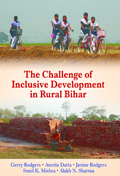 The Challenge of Inclusive Development in Rural Bihar
 Social Exclusion and Adverse Inclusion: Development and Deprivation of Adivasis in India
 Economic Reforms and Small Farms: Implications for Production, Marketing and Employment
 Contract Labour in India: Issues and Perspectives
 Labour, Employment and Human Development in South Asia, edited by Ashoka Chandra, Horst Mund, Tripurari Sharan and C.P. Thakur
 Empowering Rural Labour in India: Market, State and Moblisation edited by R. Radhakrishana and Alakh N. Sharma IHD
  India Water Vision 2025 ( a report)
 Social and Economic Security in India, edited by S. Mahendra Dev, Piush Antony, V. Gayathri and R.P. Mamgain IHD
  Informal Sector in India, edited by Amitabh Kundu and Alakh N. Sharma IHD
  Coming to Grips with Rural Child Work: A Food Security Approach edited by Nira Ramachandran and L. Massun.
 Towards a Food Secure India: Issues and Policies edited by S. Mahendra Dev, K.P. Kannan and Nira Ramachandran
 Liberalisation and Labour : Labour Flexibility in Indian Manufacturing by L.K. Deshpande, Alakh N. Sharma, Sandip Sarkar and Anup K. Karan IHD
  Lockouts in India by Ruddar Datt Manohar 2003
 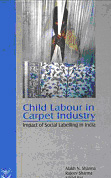 Child Labour in Carpet Industry: Impact of Social Labelling in India by Alakh N. Sharma, Rajeev Sharma and Nikhil Raj IHD
 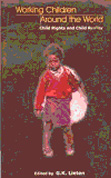 Working Children Around the World: Child Rights and China Reality by G.K. Lieten IHD
  Rural Transformation in India: The Role of Non-farm Sector edited by Rohini Nayyar and Alakh n. Sharma
 Poverty Reduction in an Elite-driven Democracy by VM Rao Daanish Books
 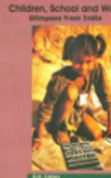 Children, School and Work : Glimpses from India by G.K. Lieten, Anup K. Karan and Anoop K. Satpathy
 Securing Health for All edited by Sujata Prasad and C. Satyamala
 Globalisation, Labour Markets and Inequality in India by Dipak Mazumdar and Dr. Sandip Sarkar Routledge, London / New Delhi [2008, pages 377,
  International Trade and Global Civil Society by Dev Nathan, D. Narasimha Reddy and Govind Kelkar Routledge India
  ICTs and Indian Social Change: Diffusion Poverty, Governance, Ed. Ashwani Saith,
  Concerns, Conflicts, and Cohesions: Universalization of Elementary Education in India, Edited by Preet Rustagi
  Growth, Employment and Labour Market edited by J. Krishnamurty and R.P. Mamgain Daanish Books
  People on the Move: Nature and Implications of Migration in a Backward
Economy
People on the Move: Nature and Implications of Migration in a Backward
EconomyMore Publications
- Books
- Monographs
- Working Papers
- Indian Journal of Human Development
- State Human Development Reports and Vision Documents
- Policy Briefs
- Income Risks and Investment in Schooling in Bihar; by Dr. Alok Kumar
- “ Small Size and Informality in Enterprises in Bihar” by Tanuka Endow
- Macro economic impact of the MGNREGA guaranteed rural work scheme in India by Akhilesh K. Sharma, Atul Sarma, Charanjit Kaur and Deeksha Tayal
- Other Publications


